Introduction
As electronic devices become smaller, faster, and more complex, manufacturers require advanced production methods that can deliver high precision, consistent quality, and cost-effective scalability. Traditional assembly techniques are often unable to meet the demands of modern electronics, particularly when dealing with compact circuit boards and high-density component layouts.
- Introduction
- What Is Surface Mount Technology (SMT)?
- What Is Turnkey PCB Assembly?
- The Evolution of PCB Assembly
- Higher Assembly Speed
- Improved Manufacturing Accuracy
- Support for Miniaturized Electronics
- Reduced Manufacturing Costs
- Enhanced Production Scalability
- Better Soldering Consistency
- Improved PCB Design Flexibility
- Increased Reliability and Product Performance
- Integration With Advanced Inspection Systems
- Environmental Benefits of SMT Manufacturing
- SMT vs Through-Hole Technology
- Future Trends in SMT Technology
- Industries Driving SMT Adoption
- Choosing a Turnkey PCB Assembly Partner With Advanced SMT Capabilities
- Conclusion
This is where Surface Mount Technology (SMT) has revolutionized the electronics manufacturing industry. Today, SMT serves as the foundation of most modern turnkey PCB assembly operations, enabling manufacturers to assemble complex circuit boards quickly and accurately.
By combining automated component placement, advanced soldering techniques, and integrated inspection systems, SMT significantly improves production efficiency while maintaining exceptional quality standards.
Understanding how SMT technology enhances turnkey PCB assembly can help businesses optimize manufacturing processes, reduce production costs, and improve product reliability.
What Is Surface Mount Technology (SMT)?
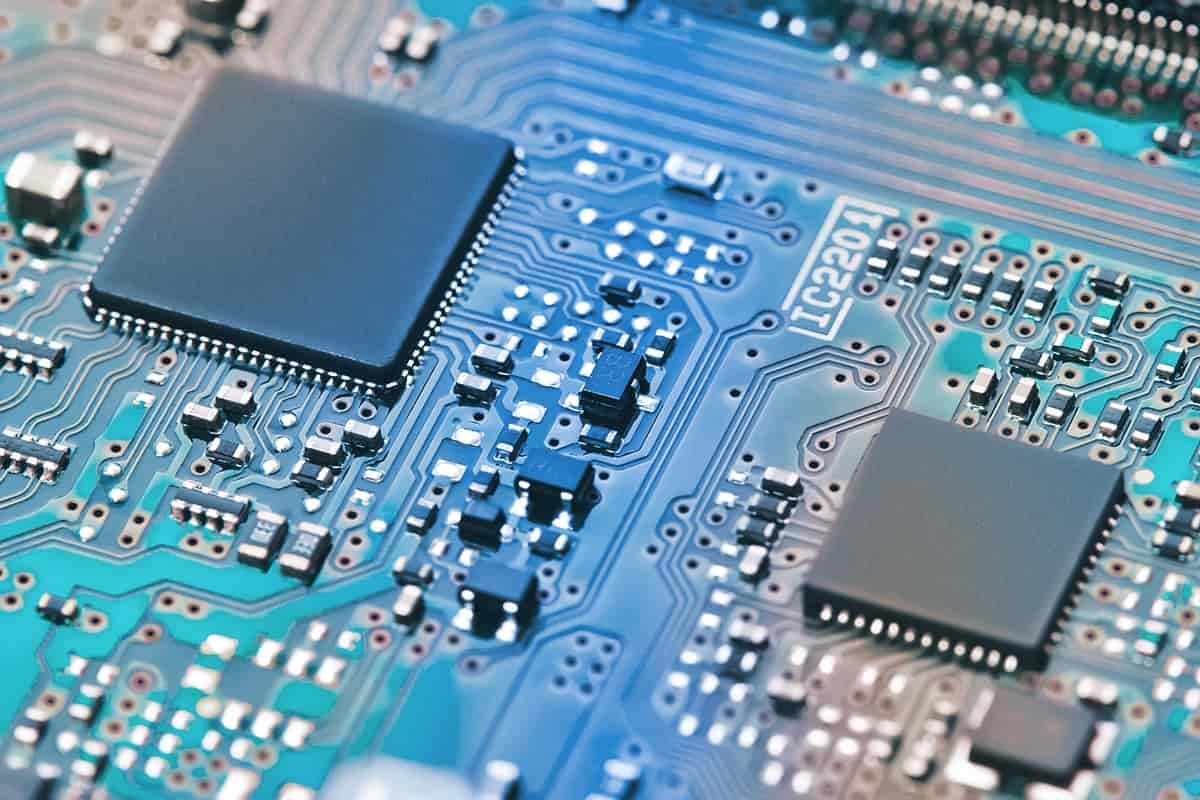
Surface Mount Technology is a PCB assembly method where electronic components are mounted directly onto the surface of a printed circuit board rather than being inserted through drilled holes.
Components designed for SMT are known as Surface Mount Devices (SMDs).
Unlike traditional through-hole technology, SMT allows components to be placed on both sides of a PCB, supporting higher component density and more compact electronic designs.
Common SMT Components
Examples of surface-mount components include:
- Resistors
- Capacitors
- Integrated circuits (ICs)
- Diodes
- Transistors
- Sensors
- Microcontrollers
- Wireless communication modules
Because of their small size and compatibility with automated assembly equipment, SMDs are widely used across nearly every electronics industry.
What Is Turnkey PCB Assembly?
Turnkey PCB assembly is a complete manufacturing solution where a single provider manages all stages of production.
Services typically include:
- PCB fabrication
- Component sourcing
- SMT assembly
- Through-hole assembly
- Inspection and testing
- Packaging and shipping
SMT technology plays a central role in this process by enabling efficient, automated assembly of electronic components.
The Evolution of PCB Assembly
Before SMT became mainstream, most electronic products relied on through-hole assembly.
In through-hole technology:
- Component leads pass through drilled holes
- Components are soldered on the opposite side of the board
- Manual assembly often plays a larger role
While through-hole assembly remains useful for certain applications, it presents limitations in terms of speed, miniaturization, and automation.
SMT was developed to address these challenges and has become the dominant assembly method for modern electronics manufacturing.
Higher Assembly Speed
One of the most significant advantages of SMT technology is increased production speed.
Modern pick-and-place machines can install thousands of components per hour with exceptional precision.
Automated Placement Systems
SMT assembly lines use automated machines that:
- Identify component locations
- Pick components from reels
- Position parts accurately
- Verify placement during assembly
This automated process is dramatically faster than manual assembly methods.
Impact on Turnkey PCB Assembly
Faster component placement helps manufacturers:
- Reduce production time
- Increase throughput
- Meet tight deadlines
- Improve overall efficiency
For businesses launching new products, faster assembly directly contributes to quicker time-to-market.
Improved Manufacturing Accuracy
Precision is essential in modern electronics manufacturing.
Many PCB designs contain:
- Fine-pitch components
- Dense circuit layouts
- Miniature integrated circuits
Manual assembly methods often struggle to achieve the required level of accuracy.
SMT Precision Benefits
Automated placement systems can position components with extremely high accuracy, reducing:
- Alignment errors
- Polarity mistakes
- Component placement defects
- Assembly inconsistencies
Improved precision leads to higher manufacturing yields and better product quality.
Support for Miniaturized Electronics
Consumers increasingly demand smaller and more powerful electronic devices.
Examples include:
- Smartphones
- Wearable devices
- Medical sensors
- IoT products
- Portable electronics
These compact products require densely populated PCBs.
SMT Enables Miniaturization
Because SMT components are significantly smaller than through-hole components, manufacturers can:
- Increase component density
- Reduce PCB size
- Improve functionality
- Optimize space utilization
This capability is essential for modern product development.
Reduced Manufacturing Costs
Cost control remains a major priority in electronics production.
SMT technology helps reduce manufacturing expenses in several ways.
Lower Labor Requirements
Automated assembly systems minimize the need for manual labor during component placement.
This reduces:
- Assembly labor costs
- Human error rates
- Training requirements
Faster Production Cycles
Higher assembly speeds improve production efficiency and lower per-unit manufacturing costs.
Material Savings
Smaller SMT components often require:
- Less PCB space
- Reduced material usage
- More efficient board designs
Together, these factors contribute to lower overall production costs.
Enhanced Production Scalability
Manufacturers often need to scale production rapidly as product demand increases.
SMT assembly lines are highly scalable and can support:
- Prototype production
- Small-batch manufacturing
- Medium-volume production
- High-volume assembly
Benefits for Turnkey PCB Assembly
Scalable SMT systems allow manufacturers to:
- Adjust production capacity quickly
- Maintain consistent quality
- Improve manufacturing flexibility
This makes turnkey PCB assembly suitable for both startups and large-scale manufacturers.
Better Soldering Consistency
Reliable solder joints are essential for product performance and longevity.
SMT assembly typically uses reflow soldering, which provides highly controlled soldering conditions.
Reflow Soldering Process
The process includes:
- Solder paste application
- Component placement
- Controlled heating cycles
- Solder joint formation
Advantages of Reflow Soldering
Reflow technology improves:
- Joint consistency
- Electrical reliability
- Mechanical strength
- Production repeatability
Consistent solder quality reduces field failures and warranty claims.
Improved PCB Design Flexibility
SMT technology allows engineers greater flexibility when designing electronic products.
Design Advantages
Manufacturers can create:
- Multi-layer PCBs
- High-density layouts
- Compact assemblies
- Complex circuit architectures
This design freedom supports innovation across multiple industries.
Applications Benefiting From SMT
Common applications include:
- Consumer electronics
- Medical equipment
- Automotive electronics
- Telecommunications devices
- Industrial automation systems
Advanced SMT capabilities help manufacturers support increasingly sophisticated product designs.
Increased Reliability and Product Performance
Assembly quality directly affects product reliability.
Poor assembly practices can result in:
- Loose connections
- Electrical failures
- Reduced product lifespan
SMT Reliability Benefits
SMT technology improves reliability through:
- Precise component placement
- Consistent solder joints
- Automated assembly controls
- Reduced handling damage
These advantages contribute to better long-term product performance.
Integration With Advanced Inspection Systems
Modern turnkey PCB assembly facilities combine SMT technology with automated inspection systems.
Automated Optical Inspection (AOI)
AOI systems verify:
- Component placement
- Polarity orientation
- Solder quality
- Missing parts
X-Ray Inspection
X-ray inspection detects:
- Hidden solder defects
- BGA connection issues
- Internal assembly faults
Benefits of Automated Inspection
These systems improve:
- Defect detection
- Quality assurance
- Manufacturing consistency
- Production efficiency
Inspection integration further enhances the value of SMT assembly.
Environmental Benefits of SMT Manufacturing
Sustainability is becoming increasingly important in electronics manufacturing.
SMT supports environmentally responsible production through:
- Reduced material consumption
- Lower energy usage
- Smaller component sizes
- Reduced manufacturing waste
Many turnkey PCB assembly providers also utilize lead-free soldering processes and environmentally compliant materials.
These initiatives support greener manufacturing practices.
SMT vs Through-Hole Technology
While both technologies remain important, SMT offers several advantages for most modern electronics applications.
SMT Advantages
- Higher assembly speed
- Greater automation
- Smaller components
- Higher PCB density
- Lower production costs
- Better scalability
Through-Hole Advantages
- Strong mechanical connections
- Better suitability for high-stress components
- Easier manual prototyping
Many products use a combination of both technologies to maximize performance and reliability.
Future Trends in SMT Technology
SMT technology continues to evolve alongside advances in electronics manufacturing.
Emerging developments include:
- AI-powered assembly optimization
- Smart factory integration
- Ultra-high-speed placement systems
- Advanced solder paste inspection
- Machine learning quality control
- Industry 4.0 manufacturing systems
These innovations will further improve efficiency, accuracy, and production scalability.
Industries Driving SMT Adoption
Numerous industries rely heavily on SMT-based turnkey PCB assembly.
Consumer Electronics
Demand compact and feature-rich products.
Automotive Industry
Require reliable electronic control systems.
Medical Technology
Need precision assembly and strict quality standards.
Telecommunications
Depend on high-density communication hardware.
IoT Manufacturing
Require miniature, low-power electronic designs.
The growing complexity of these industries will continue to drive SMT adoption worldwide.
Choosing a Turnkey PCB Assembly Partner With Advanced SMT Capabilities
Not all manufacturers offer the same SMT expertise.
Businesses should evaluate:
- Equipment technology
- Placement accuracy
- Inspection systems
- Production capacity
- Engineering support
- Quality certifications
An experienced SMT-focused manufacturing partner can significantly improve production outcomes and product reliability.
Conclusion
Surface Mount Technology has transformed modern electronics manufacturing by enabling faster, more accurate, and more efficient PCB assembly processes.
Within turnkey PCB assembly operations, SMT improves production speed, reduces costs, enhances quality, supports miniaturization, and enables scalable manufacturing.
As electronic devices continue to become more sophisticated, SMT technology will remain the foundation of efficient PCB assembly and high-performance product manufacturing.
Companies that leverage advanced SMT capabilities through experienced turnkey PCB assembly providers will be better positioned to compete in the rapidly evolving electronics marketplace.