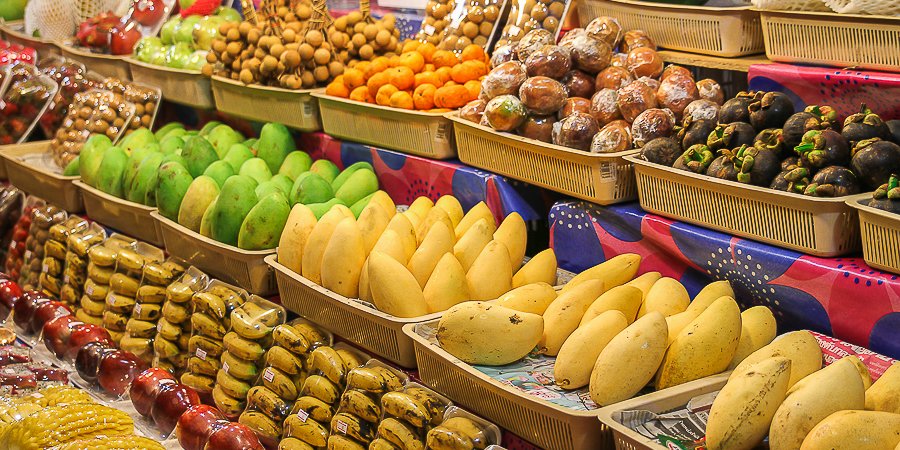
For sweet, ripe mangoes, the hot months around March to May are a good time to visit Thailand. Come later in the year and you’ll have other fruit to look out for, including longan and southern rambutan harvests. There is no need to miss out just because your holiday falls outside mango season.
The fruit seasons in Thailand vary by growing region, so a calendar is a starting point rather than a promise about every market stall. A fruit harvested in the east may arrive at a different time from the same fruit grown further south. Ask where the fruit comes from as well as whether it is in season.
Mangoes are particularly enjoyable when you can compare varieties. Nam Dok Mai is a familiar choice for eating ripe, with smooth, sweet flesh that suits sticky rice and coconut sauce. If you want that soft dessert mango, tell the seller. Green mangoes sold for eating crisp provide a different snack, with a dip, and waiting for one to soften may not give you the fruit you had in mind.
Lychees are another reason to pay attention during the hot months. For the Kom lychee grown in Samut Songkhram, the usual season is around April and May. That is a fairly short opportunity compared with fruits you can find through much of the year, so it is worth trying a small bunch when you see a good supply.
Later harvests give you a reason to keep looking. Rongrian rambutan from Nasan in Surat Thani is associated with July and August, while Lamphun’s Biaokhiao longan is harvested roughly from July to September. Those regional names can help explain why fruit that seemed to disappear from one place is still being sold somewhere else.
Mangosteen is another fruit worth looking for later in the year. The Khao Khiriwong fruit grown in Nakhon Si Thammarat is harvested from around July to December. If you are heading south, ask what is arriving from the nearby orchards. You may find a seasonal favourite you thought you had missed.
There are reliable choices outside these shorter harvests too. Bananas, pineapple and young coconuts are widely available throughout the year. You can enjoy those while keeping an eye out for something more seasonal, rather than making every fruit purchase depend on a calendar.
Weather and the individual crop will still affect what reaches the stall. If you are planning an orchard visit, contact the grower before travelling to find out what is actually being harvested. A published season helps you choose the month, but it cannot tell you what will be ready on the day.
At the market, ask which fruit is ready to eat now and which will keep for later. Buy a modest amount if you are staying in a hotel, especially when you have limited fridge space. A ripe mango for this afternoon and a small bunch of longan to share after dinner will give you more pleasure than a large bag you cannot finish.